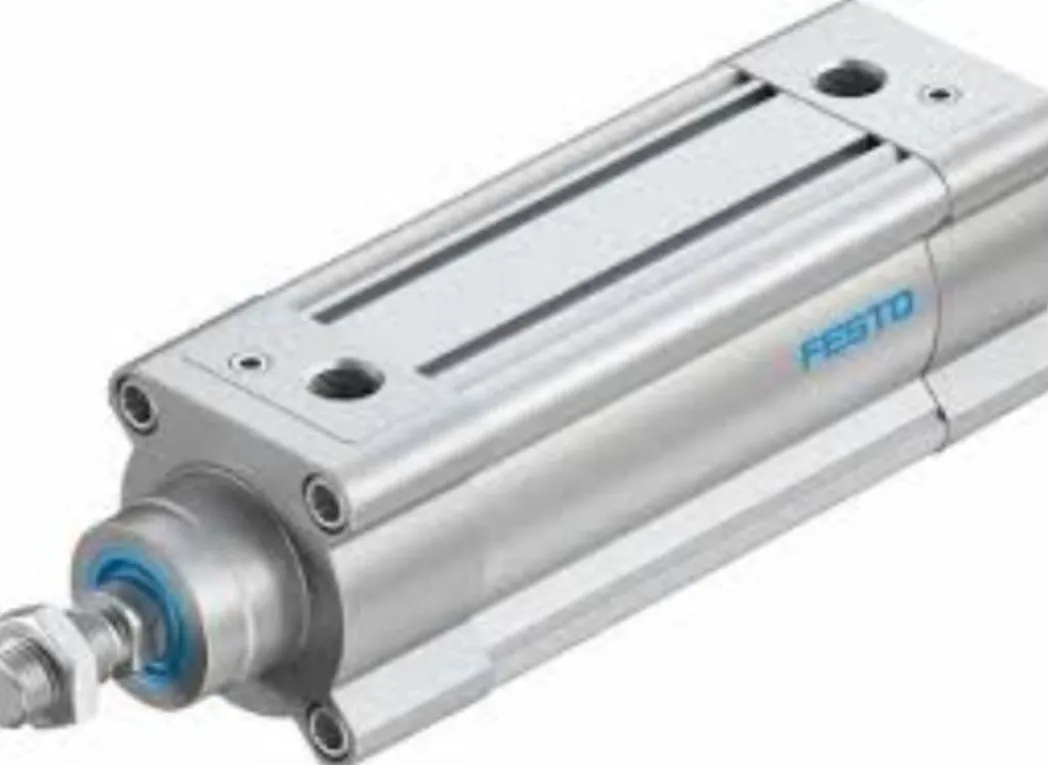
Selecting an air cylinder requires more than choosing a bore and stroke. The cylinder must generate sufficient force, move through the required distance, fit the machine layout, operate at the desired speed, and work correctly with valves, fittings, tubing, and accessories.
For manufacturers in Bangalore, careful cylinder selection can improve machine reliability and reduce premature wear.
Start With the Required Force
Cylinder force depends mainly on piston area and operating air pressure.
A larger bore generally produces more force at the same pressure.
However, theoretical force should not be treated as the only selection figure. Actual machine conditions may involve friction, load variation, mechanical losses, and pressure drops.
A reasonable safety margin should be considered according to the application.
Determine the Correct Stroke Length
Stroke is the distance the piston rod needs to travel.
Choosing a stroke that is too short prevents the mechanism from completing its movement. An unnecessarily long stroke can increase installation space and may complicate machine design.
Measure the actual required movement before selecting the cylinder.
Choose Between Single-Acting and Double-Acting Designs
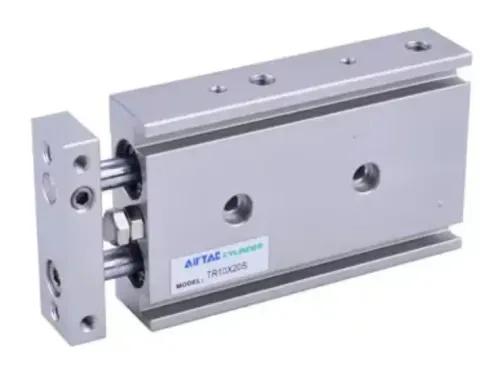
Single-acting cylinders use compressed air in one direction and usually rely on a spring or external force for return movement.
Double-acting cylinders use compressed air for both extension and retraction.
Double-acting designs are widely used where controlled movement is required in both directions.
Cylinder Selection for Whitefield and Bangalore Manufacturing
Industrial automation systems in Whitefield and across Bangalore may use cylinders for:
- Clamping
- Pressing
- Lifting
- Positioning
- Product transfer
- Gate operation
- Packaging
- Assembly
- Sorting
Hakimi Pneumatic & Hardware supports industrial requirements for air cylinders, pneumatic cylinder accessories, fittings, valves, and related components used in such applications.
Don't Overlook Mounting Accessories
Mounting arrangement affects cylinder alignment and service life.
Common cylinder accessories may include:
- Foot mounts
- Flange mounts
- Clevis brackets
- Rod-end joints
- Pivot mounts
- Sensors
- Magnetic switches
- Flow controllers
Poor mounting can create side loading on the piston rod, increasing wear on seals and guide components.
Control Cylinder Speed Properly
Cylinder speed is influenced by airflow.
Flow-control valves or speed controllers are commonly used to regulate movement.
If the cylinder is moving too slowly, check the entire airflow path before increasing pressure. Restrictions may exist in the valve, tubing, fittings, silencers, or flow-control device.
Consider Sensors for Automated Machines
Many modern cylinders are designed to work with magnetic sensors or reed switches.
These sensors can provide position feedback to PLCs or machine control systems.
They are useful where the machine needs confirmation that a cylinder has fully extended or retracted before the next operation begins.
Verify the Complete Pneumatic Circuit
Before finalising an air cylinder, confirm that the supporting components are appropriately sized.
This includes:
- Solenoid valve flow capacity
- Pneumatic tubing diameter
- Fitting size
- Flow-control capacity
- Available operating pressure
- Exhaust arrangement
An oversized cylinder connected to undersized tubing and valves may not achieve the expected speed.
For manufacturers planning new automation or replacing existing actuators, evaluating force, stroke, mounting, speed, sensing, and airflow together creates a more reliable pneumatic system than selecting the cylinder in isolation.
Keywords