Choosing the right connection method is essential when designing or maintaining a compressed-air system. Pneumatic connectors and conventional air fittings perform the same basic function—joining tubing with valves, cylinders, manifolds, and other components—but their installation methods and practical advantages can differ considerably.
For manufacturing facilities in Bangalore, the right choice usually depends on operating pressure, maintenance frequency, installation space, tube material, and machine design.
How Pneumatic Connectors Work
Modern pneumatic connectors commonly use a push-to-connect mechanism. The pneumatic tubing is inserted directly into the fitting, where an internal gripping and sealing arrangement holds it securely.
This design can simplify installation because technicians generally do not need to dismantle several fitting components whenever tubing is connected or replaced.
Push-in pneumatic connectors are particularly useful in machines where air lines require periodic inspection or replacement.
How Conventional Air Fittings Differ
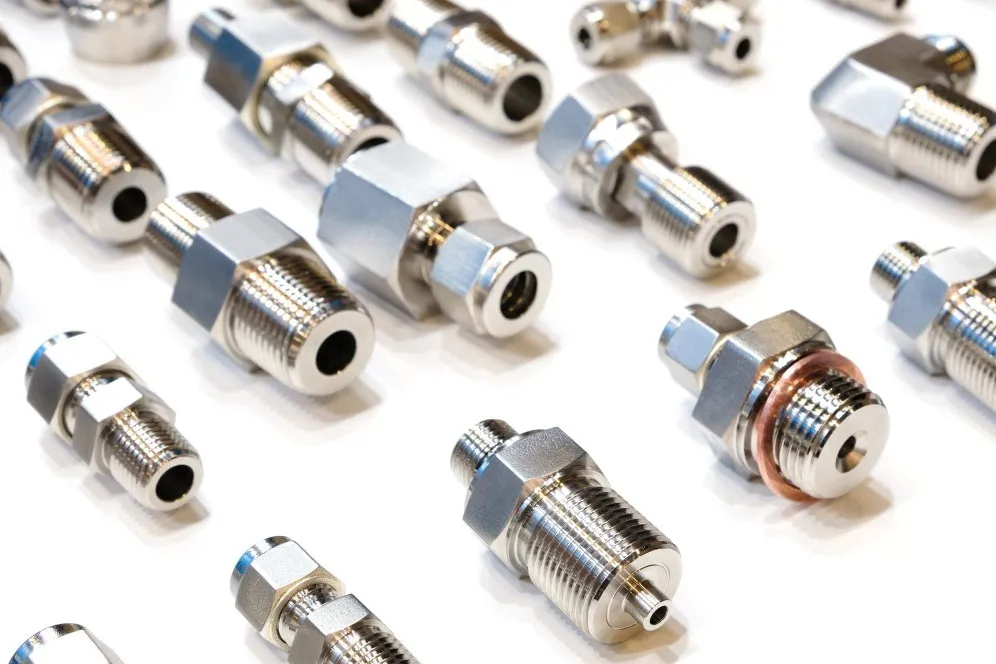
Traditional connection methods may include threaded, compression, or barbed fittings.
Depending on the design, installation can involve tightening nuts, clamps, or threaded components. These fittings remain useful in many industrial applications, especially where a particular connection style, tube material, or operating condition requires them.
The question is therefore not whether one fitting type is universally better. It is whether the connection method matches the application.
Comparing the Two for Peenya Manufacturing Units
Manufacturers in Peenya and surrounding Bangalore industrial areas often operate machinery with multiple pneumatic lines. In such environments, maintenance accessibility can become an important consideration.
Push-in pneumatic connectors offer several practical benefits:
- Faster tube installation and removal
- Compact connection arrangements
- Convenient machine maintenance
- Multiple configurations such as straight, elbow, tee, and reducer
- Good compatibility with commonly used pneumatic tubing
Conventional fittings may be preferred where:
- The application specifies compression connections
- Hose rather than standard pneumatic tubing is being used
- Mechanical connection requirements differ
- Existing equipment uses a particular fitting standard
- Operating conditions require a specialised fitting design
Hakimi Pneumatic & Hardware provides pneumatic components for different industrial air-system requirements, allowing manufacturers to select connections according to actual machine specifications.
Consider More Than the Connection Style
When comparing fittings, look beyond convenience.
The following specifications should be checked:
Tube size: The connector must match the outside diameter of the tubing.
Thread type: Pneumatic equipment may use different thread standards and sizes.
Working pressure: The fitting should be suitable for the system's intended pressure range.
Temperature: Operating temperature can influence fitting and seal compatibility.
Material: Brass, engineering plastic, stainless steel, and other materials may be used depending on the application.
Environment: Dust, moisture, chemicals, vibration, and other conditions should be considered.
Which Option Should You Choose?
Push-in pneumatic connectors are a practical choice for many modern automation systems because they simplify installation and maintenance. However, conventional air fittings continue to have important applications.
The best decision comes from matching the fitting to the tubing, operating conditions, maintenance requirements, and pneumatic components already installed.
A connection may appear to be a minor part of a machine, but selecting it carefully can help reduce leakage problems and make future maintenance significantly easier.
Keywords