Pneumatic fittings are often purchased as routine maintenance items, but incorrect selection can lead to leakage, pressure loss, difficult installation, or compatibility problems with tubing and equipment.
For manufacturers in Peenya, Bangalore, using a simple buying checklist can make procurement more accurate and reduce avoidable replacement issues.
1. Confirm the Tube Outside Diameter
Most push-in pneumatic fittings are selected according to the outside diameter of the tube.
A fitting designed for one tube size should not be used with another.
Before ordering, check the actual tubing specification rather than estimating visually. Even a small mismatch can affect sealing.
2. Check the Thread Type and Size
Thread compatibility is equally important.
Pneumatic fittings may use different thread standards and sizes. The mating equipment—such as a valve, cylinder, manifold, or regulator—must use the correct matching thread.
Forcing incompatible threads together can damage both components.
3. Choose the Right Fitting Configuration
The machine layout determines the fitting shape required.
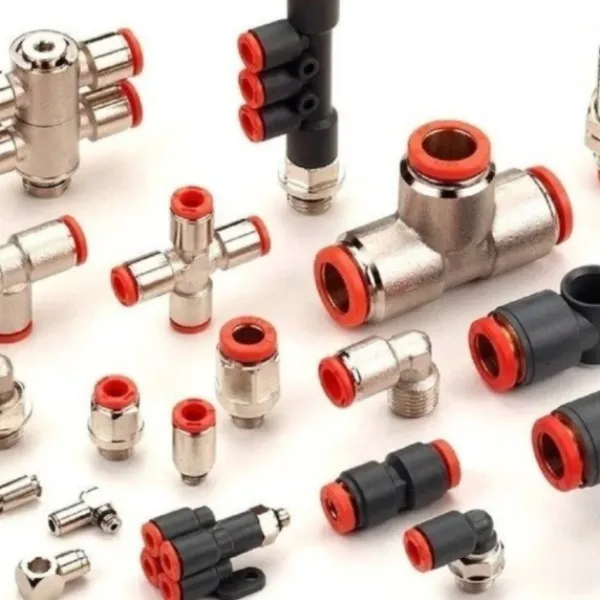
Common options include:
- Straight fittings
- Elbow fittings
- Tee connectors
- Union connectors
- Reducers
- Bulkhead fittings
- Flow-control fittings
A compact machine may require elbow fittings where straight fittings would create unnecessary tube bending.
4. Verify Working Pressure
Every fitting should be suitable for the intended system pressure.
Do not assume that all air fittings are rated identically.
Pressure requirements should be checked against the manufacturer's product specifications.
5. Consider Operating Temperature
Temperature can affect fitting body materials and internal seals.
Machinery located near heat-producing equipment or operating in unusual environmental conditions may require fittings designed for those temperatures.
6. Review Material Requirements
Pneumatic fittings may use combinations of engineering plastic, brass, nickel-plated brass, stainless steel, or other materials.
The right material depends on the working environment, exposure conditions, mechanical requirements, and application.
Hakimi Pneumatic & Hardware supplies pneumatic fittings and related components for industrial applications across Peenya and the wider Bangalore manufacturing region.
7. Check Compatibility With PU Pipe or Pneumatic Tubing
The selected fitting should match the tubing material and dimensions.
For push-to-connect fittings, tubing should generally be:
- Clean
- Round
- Free from surface damage
- Cut squarely
- Inserted fully
Damaged tubing can cause leaks even when the fitting is correct.
8. Consider Maintenance Access
A fitting may work technically but still be difficult to service if installed in a cramped location.
When designing or modifying machinery, consider whether technicians can disconnect and reconnect the fitting without removing several other components.
9. Avoid Mixing Unverified Components
Using fittings, tubing, valves, and cylinders without checking compatibility can create airflow or connection problems.
The entire pneumatic circuit should be considered as a system.
10. Keep Frequently Used Sizes Available
Manufacturing units that use standard fitting sizes repeatedly may benefit from maintaining a small inventory of common replacement items.
This can reduce downtime when a fitting becomes damaged during maintenance.
A careful buying process does not need to be complicated. Confirming tube size, thread type, fitting shape, pressure, temperature, and application compatibility before purchase can prevent many common pneumatic connection problems.
Keywords