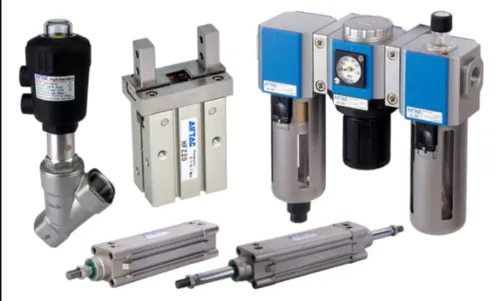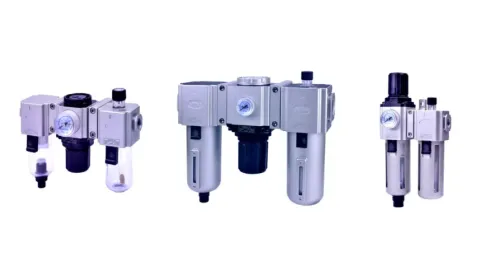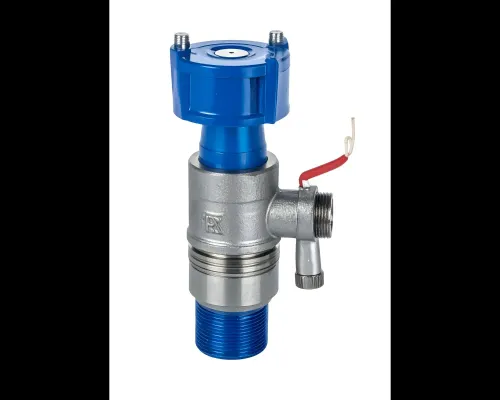
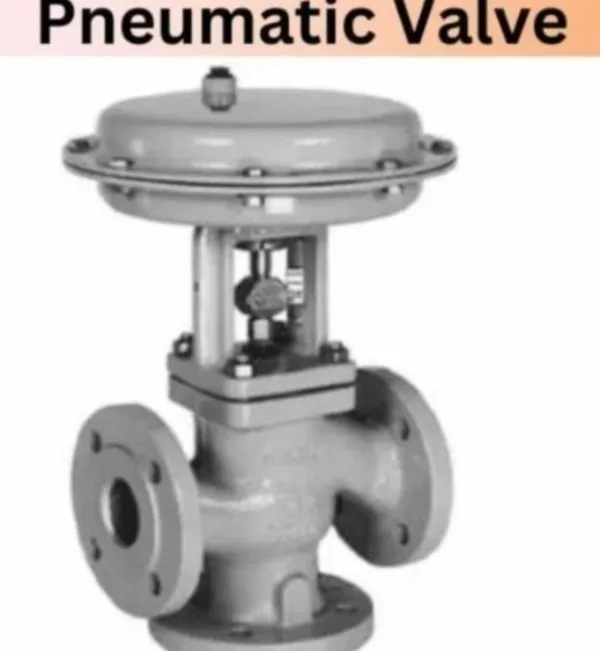
Pneumatic valves control the direction, pressure, and flow of compressed air within pneumatic equipment. Although air cylinders often perform the visible mechanical movement, valves determine when that movement starts, stops, changes direction, or operates at a particular speed.
For manufacturers using automation equipment in Bangalore, understanding pneumatic valve functions can make troubleshooting and component selection considerably easier.
What Does a Pneumatic Valve Do?
A pneumatic valve controls compressed air between the supply source and different parts of a pneumatic circuit.
Depending on its design, a valve may:
- Start or stop airflow
- Redirect compressed air
- Control actuator direction
- Regulate airflow volume
- Release exhaust air
- Maintain or control pressure
- Isolate sections of a pneumatic system
The correct valve depends largely on what the machine or actuator is expected to do.
Understanding Valve Port and Position Configurations
Pneumatic valves are often identified according to their number of ports and operating positions.
Common configurations include:
2/2-way valves:
Two ports and two operating positions. These are commonly used for basic ON/OFF airflow control.
3/2-way valves:
Three ports and two positions. They are frequently used with single-acting pneumatic cylinders.
5/2-way valves:
Five ports and two positions. These are widely used for controlling double-acting air cylinders.
5/3-way valves:
Five ports and three positions. These provide an additional centre position and can be useful where more specific actuator behaviour is required.
Understanding these configurations helps prevent mismatches between valves and actuators.
Pneumatic Valve Applications in Bangalore Manufacturing
Industrial areas such as Bommasandra accommodate manufacturing, engineering, fabrication, packaging, pharmaceutical, automotive, and other production activities where pneumatic automation is commonly used.
Pneumatic valves can be found in:
- Packaging machinery
- Assembly equipment
- Material-handling systems
- Clamping mechanisms
- Sorting machines
- Pick-and-place systems
- Automated production lines
- Processing machinery
Hakimi Pneumatic & Hardware works with pneumatic components used across various industrial air-control requirements.
Manual, Mechanical, and Electrically Operated Valves
Not every pneumatic valve is operated in the same way.
Manual valves are controlled directly by an operator through a lever, knob, button, or similar mechanism.
Mechanically operated valves can be triggered by machine movement using mechanisms such as rollers or plungers.
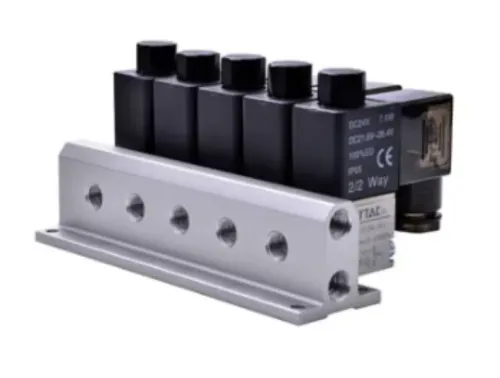
Solenoid-operated valves use an electrical signal to change valve position. They are particularly important in automated equipment because PLCs, switches, sensors, and control systems can activate them.
The choice depends on the required level of automation and control.
Why Correct Valve Sizing Is Important
Selecting a valve only by port size can be misleading.
The valve must provide enough airflow for the connected actuator. If airflow capacity is insufficient, cylinder movement may become slower than required even when the compressor pressure appears adequate.
Engineers should consider:
- Operating pressure
- Required airflow
- Port size
- Valve configuration
- Actuator size
- Switching frequency
- Voltage for solenoid-operated models
- Environmental conditions
Valve selection should therefore be based on the complete pneumatic application rather than one specification alone.
A properly matched pneumatic valve helps create predictable airflow control, responsive cylinder operation, and a more efficient pneumatic circuit.
Keywords